The ECM Synchronika is a premium dual-boiler espresso machine built for home baristas who want commercial-style control without moving fully into café equipment. This guide explains the main components, how they work together, what changed with the ECM Synchronika II, and what to consider during setup, maintenance, and purchase research. If you are comparing models or looking for an ECM Synchronika parts diagram, the aim is to make the machine easier to understand before you adjust, clean, upgrade, or buy.
What parts make up the ECM Synchronika?
The ECM Synchronika is built around a dual-boiler system, an E61-style brew group, a rotary pump, PID temperature control, steam and hot-water circuits, pressure gauges, portafilters, and either a water reservoir or plumbed-in water connection. In practical terms, these parts let the machine brew espresso and steam milk at the same time, while giving the user more control over temperature, pressure, and workflow than a simpler single-boiler machine.

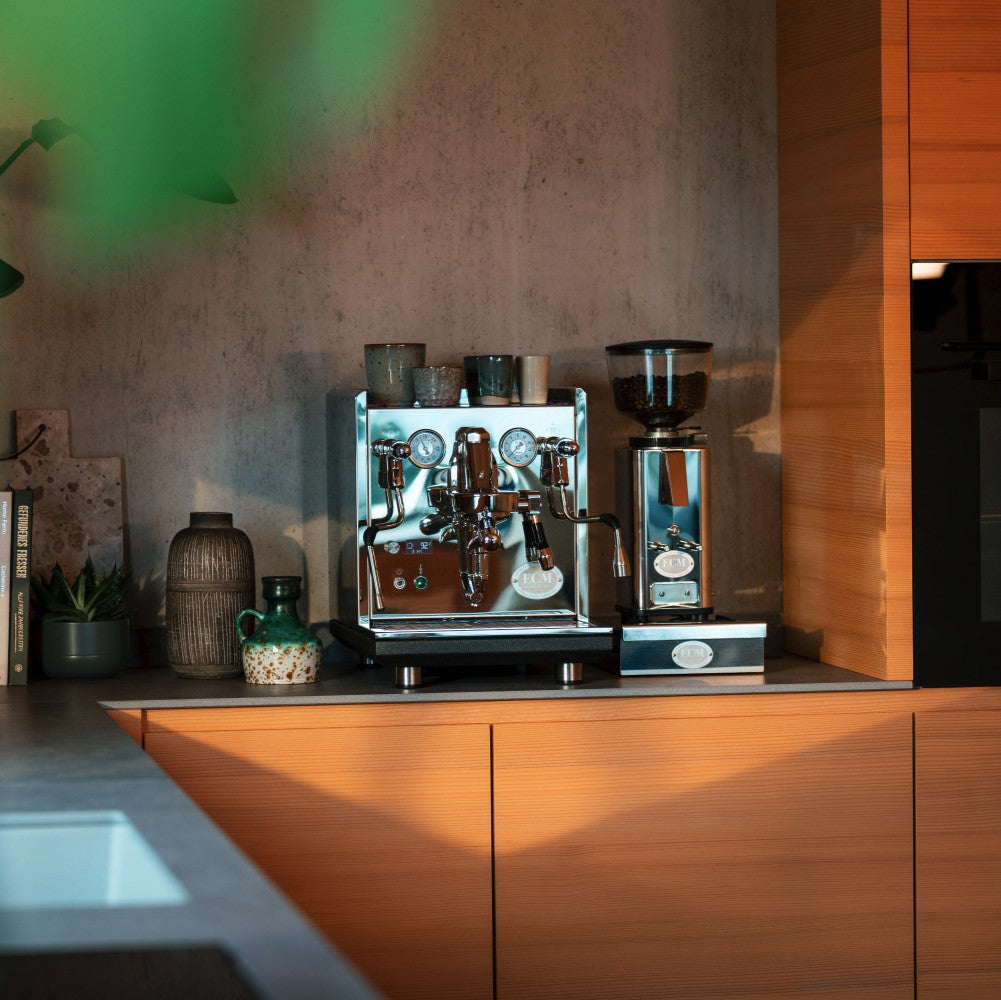
A useful ecm synchronika parts diagram should show both the visible controls and the internal systems. Externally, the main points of interaction are the brew lever, steam wand, hot-water wand, pressure gauges, portafilter, drip tray, PID display and power controls. Internally, the key parts are the coffee boiler, steam boiler, pump, water routing, valves, sensors and electronics that manage heating and pressure.
ECM’s own material describes the Synchronika line as a dual-boiler machine with a rotary pump, with the original model using a stainless steel coffee boiler of about 0.75 litres and a steam/hot-water boiler of about 2 litres. The Synchronika II continues the dual-boiler concept and adds newer temperature and heat-up features, including ECM’s 3CT temperature control and additional heating cartridges in the brew group. (ecm.de)
The core systems work as one machine
The appeal of the ecm synchronika is not one single part; it is the way the main systems support each other. The coffee boiler focuses on brew water stability, while the steam boiler provides the energy needed for milk steaming and hot water. This separation matters because pulling a shot and steaming milk place different demands on the machine.
The rotary pump helps deliver consistent pressure more quietly than many vibration-pump machines. Pressure gauges then give you a live view of pump and steam pressure, which is helpful when diagnosing changes in performance. If a shot suddenly runs differently, the gauges can help you decide whether to look at grind size, puck prep, pump pressure, water supply, or boiler behaviour.
The PID controller is the quiet organiser behind the scenes. It helps manage boiler temperature and, on current Synchronika II information, is part of a broader control interface that can include brew temperature, steam pressure, pre-infusion settings and shot timing depending on the configuration.
What changed with the ECM Synchronika II?
The ECM Synchronika II is best understood as an evolution rather than a completely different concept. It keeps the prosumer dual-boiler, rotary-pump foundation, but adds faster warm-up and updated control features designed to improve daily usability.
The most notable upgrade is the heated brew group system. ECM states that the Synchronika II uses additional heating cartridges in the brew group and can reach operating readiness in around six and a half minutes. For people who make coffee before work, that change can matter more than almost any specification on paper. (ecm.de)
Other practical differences centre on the interface. Retailer descriptions highlight an OLED PID display, a tactile control knob, shot timing, pre-infusion options, auto-on/off scheduling and switchable water supply on Synchronika II configurations. Availability can vary by market and package, so always confirm the exact specification before purchase.
Flow control adds another layer of espresso tuning
The ECM synchronika ii flow control option is for users who want to shape pressure and water flow during extraction. Instead of relying only on grind size, dose and yield, flow control lets you experiment with gentler pre-wetting, slower ramps, or declining pressure-style profiles.
That extra control can be rewarding, especially for light roasts or coffees that taste sharp when extracted aggressively. It can also add complexity. If you are still learning espresso basics, focus first on grind, dose, distribution, tamping and brew ratio; flow control is most useful once you can already produce repeatable shots.

A simple way to approach flow control is:
- Start with the valve fully open and dial in normally.
- Add a short low-flow pre-infusion once your baseline recipe tastes good.
- Change one variable at a time, such as pre-infusion length or final yield.
- Keep notes, because taste changes can be subtle.
- Return to a standard profile if the coffee becomes muddled or hollow.
Setup choices affect the daily experience
A thoughtful ecm synchronika setup starts before the machine is switched on. This is a heavy countertop appliance, so position it where you can comfortably access the reservoir, drip tray, group head and power. If it will sit beneath wall cupboards, check clearance carefully, including room to remove the cup tray or refill water.
Water is just as important as electricity. The machine can typically be used from its internal reservoir or connected to a fixed water line, but the best choice depends on your kitchen and water quality. Reservoir use is flexible and renter-friendly, while plumbing-in reduces refilling and suits high-volume households. In both cases, use appropriate filtration and follow the manufacturer’s guidance to reduce scale risk.
During first setup, allow time to flush, heat, check pressures and become familiar with the controls. Do not rush straight into adjusting internal settings unless you understand what each change does. Many poor early results come from grinder setup, coffee freshness or puck preparation rather than a fault with the machine.
Reviews should be read with your workflow in mind
An ecm synchronika review often praises build quality, temperature stability, steaming power and the polished stainless-steel appearance. An ecm synchronika ii review will usually focus on whether the faster warm-up, updated controls and optional flow control make the newer model worth choosing. Those points are useful, but they only matter if they match how you actually make coffee.
When reading ecm synchronika ii espresso machine reviews, look for details about real workflow: heat-up routine, noise, steaming control, cup clearance, cleaning access, water refilling, and how easy the machine is to live with every day. A feature that sounds impressive may be irrelevant if you only drink straight espresso. Equally, simultaneous brew and steam capacity becomes far more valuable if you make several milk drinks in a row.
Price should be checked against specification
The ecm synchronika ii price can vary by finish, region, retailer, flow-control package, bundled accessories and open-box availability. Because pricing changes, treat any figure in a review as a snapshot, not a permanent benchmark. Current US retailer listings commonly position the Synchronika II as a premium prosumer machine, with flow-control versions and special finishes typically affecting the final cost.
Before comparing prices, make sure you are comparing like with like. Check whether the listing includes flow control, which finish is supplied, what portafilters are included, whether a water filter adaptor is provided, and what warranty or support applies. A slightly cheaper machine can become less attractive if it lacks the configuration or after-sales help you need.
Maintenance awareness protects performance
The Synchronika rewards consistent care. Backflush as recommended, keep the group gasket and shower screen clean, empty the drip tray before it overfills, and use suitable water from the beginning. Scale, worn seals and neglected cleaning can all make a high-end machine behave like a troublesome one.
It is also worth learning the common wear points: group gaskets, shower screens, valves, wand tips and small internal fittings. If you have seen owner discussions about items such as plastic tee connectors or awkward access to certain valves, treat them as prompts for inspection rather than proof of an inevitable problem. When in doubt, use the manual and a qualified technician rather than guessing inside a hot, pressurised machine.
Final takeaway
The ECM Synchronika and ECM Synchronika II suit home baristas who value stability, mechanical quality and hands-on control. The original model remains respected for its dual-boiler rotary-pump platform, while the Synchronika II adds faster heat-up and a more modern control experience. If you understand the parts, choose the right setup and read reviews through the lens of your own routine, the machine becomes less intimidating and much easier to evaluate.
Email us at info@homecoffeemachines.ie to let us know how much you love the Synchronika 2 and we will send you a discount code!